
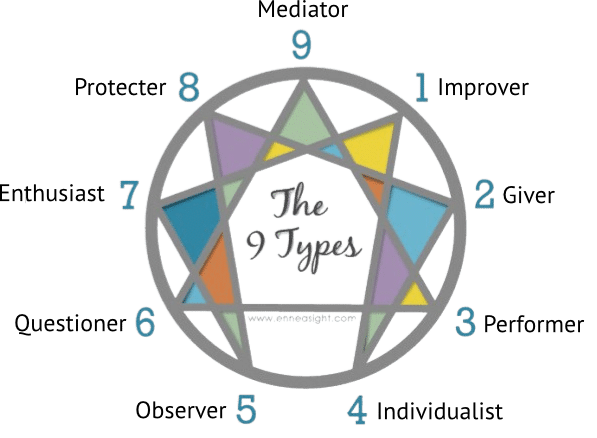
 The Enneagram is a dynamic system that describes nine personality types, each with distinct habits of feeling, thinking, and behaving. Each type has a coherent pattern in how the world is perceived, yet is biased by perceptual filters that cloak or amplify certain aspects of reality. These filters encourage a dominant habit of attention, motivated by getting our needs met.
Few personality systems delve into the motivations behind our behaviors. The Enneagram helps us understand our habit of attention and what needs we are trying to fill—the need for security/certainty (food, shelter), connection/bonding, and belonging/empowerment. When we inquire into the need motivating a behavior, we begin to perceive through the eyes of compassion for ourselves and others.
Although we have different ways of filling our needs, and some needs are more important than others depending on our Enneagram type, we all share the same underlying needs. The more we are aware of our habitual way of perceiving ourselves and the world to get our needs met, the more choice we have to respond differently.
Few personality typologies offer an avenue into the depths of who one is spiritually. One of the Enneagram's greatest assets is that it encourages self-observation and curiosity about our inner landscape. From a spiritual perspective, the Enneagram helps us discover who we are beyond our types. It also helps us develop compassion for the brilliance—yes, brilliance—of our survival strategies.
The Enneagram is a dynamic system describing nine personality types with distinctive motivations and perspectives. Although we are each unique individuals, we share common human needs and have developed strategies to get our needs met. The nine types orient around these survival strategies and help us to navigate our relationships, our inner worlds and our shared world.


Renée brings exceptional presence and warmth to her teaching which creates an open, safe, and supportive space to delve into the breath and depth of the enneagram. This work has helped me see my own, as well as others, deeper motivations which has facilitated change, release of judgments, and greater freedom of being. Renée is gifted and heartful teacher.
Renée brings a tender touch of compassion as a teacher, allowing space for all that wants to come up for her students. I was first introduced to the narrative tradition through Renee’s masterful facilitation and now believe it is a powerful process. Renée is also able to bring her knowledge and wisdom of evolutionary spirituality into her teachings of the Enneagram, which I highly appreciate.
The workshop I did with Renée brought me so much more than I had expected. I showed up relatively knowledgeable about my type, hoping to learn more about myself (I’m a self-referencing type, hahaha). While I certainly left with fresh insights about how I operate, the greatest gift was a deeper understanding of the other types. Her warm, patient, and skillful guidance helped everyone in the room share their own, unique perspectives. This left me with far greater compassion for others, humility about my own, partial perspective, and some skills for relating with others with more authenticity and love. My relationships with others now have a chance to become deeper, more genuine, and more fulfilling. This was infinitely valuable.
I have been working with Renée and exploring the Enneagram for over 2 years now. The time I’ve spent with Renée in her office and in her classes has been the guiding light on my spiritual and psychological journey.
I have grown much deeper compassion for myself and others through the enneagram. My partner and I use the enneagram every day to understand and relate to each other; we’re able to see past our initial reactions and enter into a much greater place of love, empathy and connection. What a beautiful gift!
I can’t thank Renée enough for introducing me to this heart opening and life changing system.
I wanted to thank you for your well run Enneagram workshop in Boulder last fall. As a non-professional “newbee” to the Enneagram I was fascinated. It was soooo informative. Just when I think I figure myself out, I go and get surprised all over again! I hope to come again to some future event and get surprised at myself again! I have read several Enneagram books but being among people who are also hungry for more understanding was inspiring (eye-opening, uncomfortable, and refreshing all at the same time!)
Renée Rosario is an extraordinarily gifted teacher whose insight, humor and compassion have touched my soul. From Renée, I have come to understand and accept myself better and see my habitual ways of living as remnants of an early-developed coping style. I have also learned how to turn off my critical, judgmental mind and regard myself (and others) from a compassionate and positive point of view. Most importantly, Renée has taught me valuable lessons about the virtues and highest good that we all inherently possess.
